Chapter III Independent guide
Glastonbury Tor visit: the climb, the Well and the Abbey
A small Somerset town holds a medieval abbey, a spring, a steep hill with a tower and more than a thousand years of stories. Here is how to see it well and how to tell history from legend.
Is Glastonbury Tor worth visiting
Glastonbury sits in the Somerset Levels, a flat, once marshy landscape from which the Tor rises abruptly. The town has three overlapping reputations. For historians it is the site of one of England's great medieval abbeys. For many readers of legend it is tied to Arthurian stories and to the tale of Joseph of Arimathea. For many modern visitors it is a centre of alternative spirituality, with shops, talks and gatherings.
It helps to keep these layers apart. The abbey is documented. The Joseph story first appears centuries after the events it describes. The modern spiritual scene is a living community that has grown since the twentieth century. All three are part of what you see on the High Street.
Glastonbury Tor: how long the climb takes and whether it is free
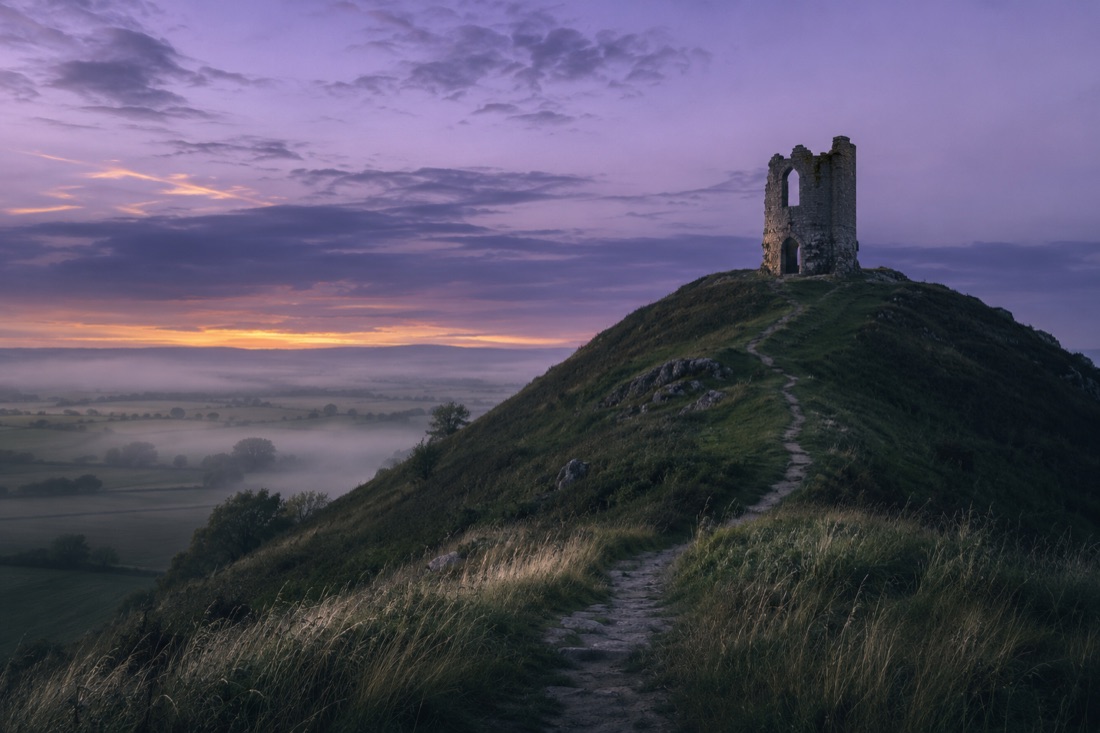
The Tor is a steep conical hill about 158 metres above sea level, topped by a roofless tower, the remains of a church of St Michael. The hill is owned by the National Trust and can be climbed free of charge from several paths. The shortest route is steep and can be slippery after rain, so wear boots with a good grip and bring water. The climb is short but demanding, and most people allow somewhere around an hour for the round trip, longer if they linger at the top. A map of the paths is easy to find on the National Trust page for the hill.
The regular terraces on the hillside have been explained in more than one way. Geologists point to natural layers in the rock, while some writers have argued for medieval farming strips or a ritual maze. No explanation has been universally accepted. Sunrise and early morning are the quietest times, and the view across the Levels is the reward.
Chalice Well Gardens and opening times
At the foot of the Tor, Chalice Well is a spring that has flowed for as long as records exist. Its water is rich in iron, which stains the stones a rusty red and has helped feed the legends that surround it. The garden around the spring is run by a charitable trust and is laid out for quiet walking.
Admission is charged and opening hours change with the season, so check the official page before you go. Visitors are asked to keep voices low and to leave the plants and the water as they find them.
Glastonbury Abbey and the King Arthur story
Glastonbury Abbey was one of the wealthiest religious houses in medieval England. In 1191, after a fire, monks announced that they had found the grave of King Arthur and Queen Guinevere. Most historians regard the claim as a medieval fundraising and prestige story rather than a discovery. The abbey was dissolved in 1539, and its last abbot, Richard Whiting, was executed on the Tor that year.
Today the ruins stand in a walled park with a small museum, and there is an entry fee. The scale of the nave and the Lady Chapel gives a strong sense of how large the abbey once was.
Planning a day without a car
Glastonbury has no railway station. Visitors usually arrive by bus from Wells, Bristol or Taunton, or take a train to a nearby mainline station and continue by road. The sites are close together, and a slow day on foot is enough for the Tor, the spring and the abbey with time to eat in between.
One common mix-up is worth clearing up: the famous music festival takes place at a farm in the nearby village of Pilton, not in the town itself, and the town is very busy in the days around it.